Be yourself; Everyone else is already taken.
— Oscar Wilde.
This is the first post on my new blog. I’m just getting this new blog going, so stay tuned for more. Subscribe below to get notified when I post new updates.
Be yourself; Everyone else is already taken.
— Oscar Wilde.
This is the first post on my new blog. I’m just getting this new blog going, so stay tuned for more. Subscribe below to get notified when I post new updates.
“Disclaimer: Academic Purposes only”


Structural functionalism has provided one of the most important perspectives of sociological research in the twentieth century and has been a major influence on research in the social sciences, including gender studies. Viewing the family as the most integral component of society, assumptions about gender roles within marriage assume a prominent place in this perspective.
Functionalists argue that gender roles were established well before the pre-industrial era when men typically took care of responsibilities outside of the home, such as hunting, and women typically took care of the domestic responsibilities in or around the home. These roles were considered functional because women were often limited by the physical restraints of pregnancy and nursing and unable to leave the home for long periods of time. Once established, these roles were passed on to subsequent generations since they served as an effective means of keeping the family system functioning properly.

According to conflict theory, society is a struggle for dominance among social groups (like women versus men) that compete for scarce resources. When sociologists examine gender from this perspective, we can view men as the dominant group and women as the subordinate group. According to conflict theory, social problems are created when dominant groups exploit or oppress subordinate groups. Consider the Women’s Suffrage Movement or the debate over women’s “right to choose” their reproductive futures. It is difficult for women to rise above men, as dominant group members create the rules for success and opportunity in society (Farrington and Chertok 1993).
Friedrich Engels, a German sociologist, studied family structure and gender roles. Engels suggested that the same owner-worker relationship seen in the labor force is also seen in the household, with women assuming the role of the proletariat. This is due to women’s dependence on men for the attainment of wages, which is even worse for women who are entirely dependent upon their spouses for economic support. Contemporary conflict theorists suggest that when women become wage earners, they can gain power in the family structure and create more democratic arrangements in the home, although they may still carry the majority of the domestic burden, as noted earlier (Rismanand and Johnson-Sumerford 1998).

Symbolic interactionism aims to understand human behavior by analyzing the critical role of symbols in human interaction. This is certainly relevant to the discussion of masculinity and femininity. Imagine that you walk into a bank hoping to get a small loan for school, a home, or a small business venture. If you meet with a male loan officer, you may state your case logically by listing all the hard numbers that make you a qualified applicant as a means of appealing to the analytical characteristics associated with masculinity. If you meet with a female loan officer, you may make an emotional appeal by stating your good intentions as a means of appealing to the caring characteristics associated with femininity.
Because the meanings attached to symbols are socially created and not natural, and fluid, not static, we act and react to symbols based on the current assigned meaning. The word gay, for example, once meant “cheerful,” but by the 1960s it carried the primary meaning of “homosexual.” In transition, it was even known to mean “careless” or “bright and showing” (Oxford American Dictionary 2010). Furthermore, the word gay (as it refers to a homosexual), carried a somewhat negative and unfavorable meaning fifty years ago, but it has since gained more neutral and even positive connotations. When people perform tasks or possess characteristics based on the gender role assigned to them, they are said to be doing gender. This notion is based on the work of West and Zimmerman (1987). Whether we are expressing our masculinity or femininity, West and Zimmerman argue, we are always “doing gender.” Thus, gender is something we do or perform, not something we are.
In other words, both gender and sexuality are socially constructed. The social construction of sexuality refers to the way in which socially created definitions about the cultural appropriateness of sex-linked behavior shape the way people see and experience sexuality. This is in marked contrast to theories of sex, gender, and sexuality that link male and female behavior to biological determinism, or the belief that men and women behave differently due to differences in their biology.
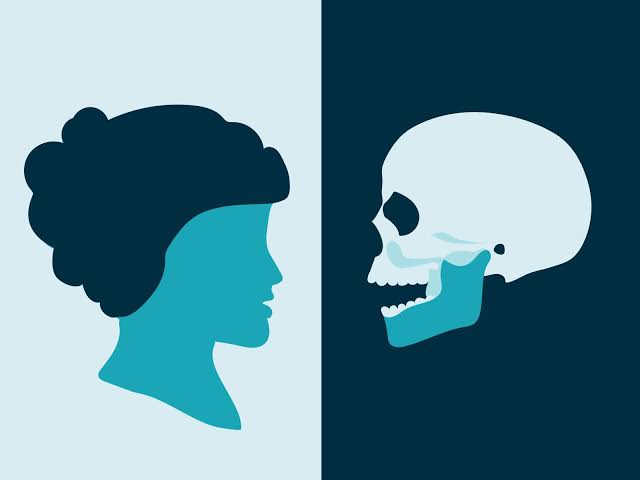
Evolutionary theory is the area that focuses on further development and refinement of the modern synthesis of evolution and genetics. Notable topics include the appropriate level of selection, the relative importance of natural selection and other mechanisms, and the rate of evolution at genotypic and phenotypic levels.
Evolutionary theory highlights the adaptive value of within-species variability. Optimal biological and behavioral strategies differ depending on the nature of the environmental context as well as the characteristics of the organism such as age, sex, health, or physical size. Pubertal timing is an example of an aspect of human physiological development that shows phenotypic plasticity. As suggested above, the typical sequence of reproductive development in humans includes a period of delay between puberty and sexual debut. During this time, adolescents acquire the physical, social, and economic resources necessary to attract a mate, reproduce, and successfully rear their young to reproductive age.
From an evolutionary perspective, early puberty is understood as an adaptive strategy in the context of family stressors and a negative quality of family relationships (Belsky, Steinberg, & Draper, 1991; James, Ellis, Schlomer, & Garber, 2012). Over the course of human evolution, early exposure to harsh, unpredictable family contexts, and/or inadequate resources has been shown to accelerate the life history resulting in an earlier onset of pubertal physical maturation and earlier age of sexual debut (Ellis, 2004). This relationship is particularly notable for girls. Physiological response to stressful conditions, especially the frequent activation of the HPA axis, is associated with early pubertal development (Ellis & Del Giudice, 2014). According to evolutionary theory, early onset of puberty and accelerated entry into sexual activity can be viewed as adaptive when parental investment is low and resources are inadequate or uncertain. Those individuals whose sexual development is accelerated increase their chances of attracting a mate and surviving to reproduce.

The social exchange theory has been applied to many different situations; in the context of sexuality, the theory aims at explaining why two particular people may engage in sexual behavior, while another two may not. The theory therefore places the focus predominantly on the relational context. It is placed here under social theories to highlight the strong influence of interpersonal power dynamics, gendered power in society, and because it takes an interpersonal orientation in analysis; however, it is also compatible with evolutionary mate-selection strategies. The social exchange theory posits that human sexuality can be analyzed with the concepts of economics – that people attempt to maximize their rewards while minimizing costs, that interaction with others is a series of exchanges, and that people who receive rewards feel obligated to reciprocate (Sprecher, 1998).
The social exchange theory has been criticized on several fronts. One major obstacle in the empirical evaluation of the concept is the subjective nature of costs and rewards, which may differ in value between different people, over time, or through comparisons with other people or rewards. The social exchange model also typically tests how exchanges affect relationships and sexual variables; meanwhile, very little research has been conducted on how the quality of a relationship affects exchange variables. The social exchange theory nevertheless demonstrates that sexual decision-making is grounded in a broader social context that regulates the risks and benefits of sex. It also demonstrates how broad social movements, such as gender equality and feminism, can alter the sexual landscape and affect decision-making.
For more information click the link below.
https://www.youtube.com/watch?v=X1mOqso0gAA
#payagnimacapil
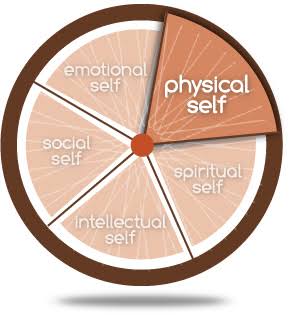
Physical Self refers to the body, this marvelous holder and complex, finely tuned, machine with which we interface with our environment and individual creatures. The Physical Self is the concrete measurement, the unmistakable perspective of the individual that can be straightforwardly watched and inspected.
In Psychoanalytical school, Sigmund Freud’s construction of self and personality makes the physical body the core of human experience. Freud was of the view that the ego is first and foremost a body ego (Freud, 1937). However, in spite of Freud’s recognition of the centrality of body, his own writings on therapy rarely discuss it. Among western theorists Wilhelm Reich seems to probably most concerned with body (Fadiman and Frager, 2002). Although, in his later works, Freud placed less emphasis on libido, Reich took Freud’s concept of libido as his central principle. For Reich, the freeing of the blocked bioenergy is the chief task of psychotherapy. Reich argued that mind and body are one; all psychological processes, he postulated, are a part of physical processes, and vice versa. So for Reich, body is essential dynamic in all psychological functioning and it plays a critical role in storing and channeling the bioenergy, which is the basis of human existence and experience.
For Erik Erikson, experience is anchored in the ground-plan of body (Erikson, 1963). According to him the role of bodily organs is especially important in early developmental stages of a person life. Later in life, the development of physical as well as intellectual skills help determine whether the individual will achieve a sense of competence and ability to choose demanding roles in a complex society. For example, healthy children derive a sense of competence as their bodies become larger, stronger, faster and more capable of learning complex skills. However, as a stage theorist, Erikson is aware of the constant interaction of the body, psychological processes and social forces. He acknowledges the classical Freudian view of fundamental biological drives but insists that these drives are socially modifiable. Self-concept is made up of one’s self-schemas, and interatomic with self-esteem, self-knowledge, and the social self to make the self as a entirety. It incorporates the past, show, and future selves, where future selves speak to individuals’ thoughts of what they might ended up, what they would like to gotten to be, or what they are anxious of getting to be. Conceivable selves may work as motivating forces for certain conduct.
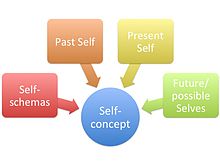
The discernment individuals have around their past or future selves relates to their discernment of their current selves. The worldly self-appraisal hypothesis contends that individuals have an inclination to preserve a positive self-evaluation by removing themselves from their negative self and paying more consideration to their positive one. In expansion, individuals have a propensity to see the past selfless positively (e.g. “I’m superior than I used to be”) and long-term self more emphatically (e.g. “I will be way better than I am presently”).

Physical characteristics are defining traits or features about your body. These are aspects that are visually apparent, knowing nothing else about the person. The first thing you see when you look someone could be their hair, clothes, nose, or figure. These are all examples of physical characteristics. To get good examples of physical characteristics you should look at a person’s face, how tall they are, and what they are wearing.
“HOW CAN I GROW AS A PERSON, IN CONTEXT OF PHYSICAL SELF”
Physical self. This aspect is much relatable to me as a woman because there is a time that I envy the other woman and I sometimes compare my physical body or self to others because of their natural beauty. I envy to their beauty and the way they carry themselves but the time pass by, I learn to love myself and thought myself that everyone of us, humans, is different to each other and there’s nothing to be ashamed of because everyone of us had this unique beauty. Just accept what is yours and love this and be confident of it and that the time the body possitivity come in. Body positivity refers to the declaration that all individuals merit to have a positive body picture, in any case of how society and prevalent culture see perfect shape, estimate, and appearance. It also too points to assist individuals get it how well known media messages contribute to the relationship that individuals have with their bodies, counting how they feel almost nourishment, work out, clothing, wellbeing, character, and self-care. By superior understanding the impact that such impacts have, the trust is that individuals can create a more beneficial and more practical relationship with their bodies.
Body inspiration is outlined to cultivate acknowledgment and adore of your body, but it can be a battle that includes another component of weight and incomprehensible guidelines to live up to. The body inspiration message is that you just ought to alter how you are feeling almost your body, but can moreover be fair one more request.

This is a part of yourself where you learn and understand your sexual development and how people’s sexual activity, beliefs, misconceptions and unlimited access from the internet on sex can influence your own sexual behaviors and responses.
Sexual self-concept defined as an individual’s assessment of his or her claim sexual sentiments and actions is proposed as an imperative indicator of prophylactic behavior among youngsters, and a scale measuring the concept is portrayed.
Sexuality frequently refers to a person’s sexual introduction or inclination. Your sexual introduction is who you’re sincerely, rationally, and physically pulled in to. Sexuality can moreover allude to a person’s capacity for sexual sentiments. More than the have to be replicate, sexual drive is an critical portion of human enthusiastic expression and profound connection with another. It’s not clear whether our sexuality could be a result of hereditary or hormonal components, our childhood and child rearing, or the society and culture we develop up in.
Sexual self-concept refers to the totality of oneself as a sexual being, including positive and negative concepts and feelings. According to theorists, sexual self-concept is described well along three dimensions (Snell & Papini, 1989): sexual self-esteem, sexual depression, and sexual preoccupation.
Because attachment style moderates one’s sense-of-self in general and one’s expectations about and strategies for approaching relationships, sexual self-concept may be a good indicator of what kinds of relationships we tend to get into, and how we tend to behave within relationships, with an emphasis on sexual satisfaction.
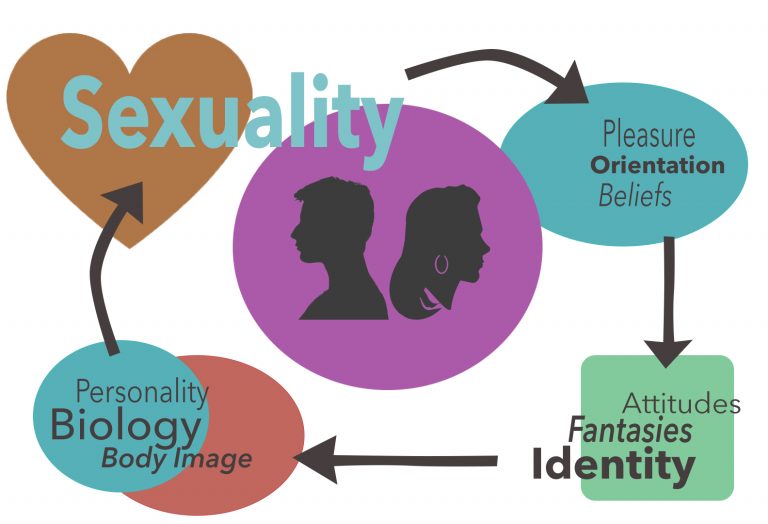
Creating a Sexual Self
*Sexual self-esteem – perception of their worth as sexual beings
*Sexual self-efficacy – perception of control over sexual experiences
*Sexual self-image – beliefs about sexual need
FOUR SEXUAL STYLES
*Sexually naive- have little confidence in sexual attractiveness, feel no control over sexual situations
*Sexually unassured- low self-esteem and little sense of control in sexual encounters, but interested in exploring their sexuality
*Sexually competent- confident of sex appeal and ability to control sexual situations, interested in exploring their sexuality and were sexually experienced
*Sexually driven- similar to above style, unable to say no to sex, mostly boys
PROTECTIVE FACTORS ASSOCIATED WITH DELAY OF SEXUAL ACTIVITY
*Biological- late maturation, being female, intelligence
*Psychological- strong religious beliefs, involvement in school
*Social- parental monitoring, family religious beliefs, not dating steadily, not using alcohol or drugs.
“HOW CAN I GROW AS A PERSON, IN CONTEXT OF SEXUAL SELF”
Developing a sexual self is an important developmental task of adolescence. Your sexuality can play an important role in your identity and sense of self. Sexuality frequently alludes to a person’s sexual introduction or inclination. Your sexual introduction is who you’re sincerely, rationally, and physically pulled in to. Sexuality can moreover allude to a person’s capacity for sexual sentiments. More than the have to be replicate, sexual drive is an critical portion of human enthusiastic expression and profound connection with another. It’s not clear whether our sexuality could be a result of hereditary or hormonal components, our childhood and child rearing, or the society and culture we develop up in. In any case, investigating your sexuality is ordinary, sound, and profoundly individual.
Your sexuality is central to your self-identity, and not being able to express this is damaging to your sense of self-worth and overall mental health.
Sexuality is an important part of who you are. There is no right or wrong, it’s about what’s right for you.
A few individuals have a difficult time tolerating others who are diverse to themselves. On the off chance that somebody gives you a difficult time around your sexuality, it’s great to conversation to somebody approximately it. You don’t got to bargain with it by yourself.

Emotional Self-Awareness is the capacity to get it your claim feelings and their impacts on your execution. You know what you’re feeling and why—and how it makes a difference or hurts what you’re attempting to do. You sense how others see you and so adjust your self-image with a bigger reality. You’ve got an exact sense of your qualities and impediments, which gives you a realistic self-confidence. It too gives you clarity on your values and sense of reason, so you’ll be more definitive after you set a course of activity.
Emotional self-regulation or emotion control is the capacity to reply to the continuous requests of involvement with the run of emotions in a way that’s socially mediocre and adequately adaptable to allow unconstrained responses as well as the capacity to delay unconstrained responses as needed. It can too be characterized as outward and natural forms dependable for checking, assessing, and altering enthusiastic reactions. Enthusiastic self-regulation has a place to the broader set of feeling direction forms, which incorporates both the direction of one’s claim sentiments and the control of other people’s feelings.
5 Ways to Take Care of Yourself Emotionally
1. Know your emotions.
All of them. What are your past experiences with each emotion? Know what triggers each of them. Understand which events, and especially people, are associated with each. Do you understand why you respond emotionally the way you do? Are you satisfied that your emotional response is appropriate and reflects what you truly feel? Or, does your emotional response feel uncomfortable — for example, over reactive (or not reactive enough for the situation)? Do you feel frustrated that you can’t adequately express yourself?
Knowing your emotions should help you judge how to behave when a situation arises. Each new event or interaction should not feel like the first time it’s happening. Each successive time a specific emotion is expressed gives you another opportunity to observe yourself and respond in a way that feels right (or at least better) for you.
2. Maintain healthy boundaries.
Think of a boundary as a healthy space around you. You decide how big this space needs to be for you to feel comfortable. It may be an actual space, measured as physical distance, or an imaginary psychological/emotional space. When you successfully maintain healthy emotional boundaries, you are taking care of yourself first and foremost. Once you’ve done that, you can actually deal with a situation or person more effectively, since you know what you can and will do, as well as what you will not allow to happen emotionally.
3. Cultivate your own well-being on every level.
Practice self-care whenever possible. Physical care will keep you healthy and strong, better able to endure life when difficult things happen. Psychological well-being goes a long way to help sustain you, especially during life challenges when you are called upon to emotionally respond. Understanding who you are at your core, what makes you tick, how you differ from or are similar to those around you, and what your attitudes and beliefs are will help keep you on the “right track,” able to stay on your path in order to accomplish what you desire. As with emotions, your psychological outlook helps keep you steady in your own life.
4. Create a healthy support system.
These are people who encourage and nurture you. These are people who know you, like who you are, and are willing to help you become your best self. People with no ulterior motive or private agenda. These are people you can always turn to just to listen and/or provide advice if needed.
5. Create an emotional or psychological “toolbox.”
This is a great visual for many of these concepts. Your “toolbox” is a place where you keep your coping skills — life management tools that you have acquired over time and over the course of having had numerous life experiences. These tools are strategies you have developed and used effectively to cope with challenges to your life and well-being.
Over time, your personal “toolbox” should come to contain everything you need. My patients know they have the tools to deal with most of what life dishes up, and they feel confident that when a challenge occurs in the future, they have what it takes to handle it. In challenging times, however, people may feel that they need to seek help in order to gain a broader perspective, and perhaps add more strategies in order to better deal with a certain situation. Anything that helps you to grow emotionally and become more grounded within yourself is always a welcome addition to your life.

“HOW CAN I GROW AS A PERSON, IN CONTEXT OF EMOTIONAL SELF”
As a person, we must know our emotion and we must aware of our emotion in order to react properly to the situation that might happen. You grow as a person in context of emotional self by increasing your emotional intelligence. A lot of people might not truly know their emotional self that is why sometimes they react wrongly to the things that happens. Emotional intelligence is the skill of to be aware of, control and ultimately express emotions. It also teaches how to identify your emotions and be aware of them, their triggers and their impact. In order you to grow in the context of emotional you must identify your triggers. A trigger is a person, a situation or a condition that makes your emotional and prompts you to certain actions. Identifying your trigger leads you to improved your emotional intelligence, because it would allow you to develop the ability to control the outcome. It could give you the skill to calm down, take control of your actions and maintain your presence of spirit.in order to do that you must find the specific cases and start generalizing from there. If you understand what your pushes buttons, that would make the situations more manageable because the emotions will not come as a surprise. Most people go through their lives without paying attention to their emotions. Either completely ignoring them, r letting them control their lives. Emotions are a powerful force that can do miracles with your life, or completely ruin them. It is the job of your mind to learn to spot them and put itself between the emotion and the physical reaction. By learning that skill, you would finally be able to get reins of your life in your own hands.

On what i have experienced on rapelling, it was quite fun and at the same time scary because that was my first time. At the moment when i was on the top I feel so nervous, for a thought that i will fall and you know, I’m left handed, but when i already jumped it was so fun. I feel so brave after i did that.
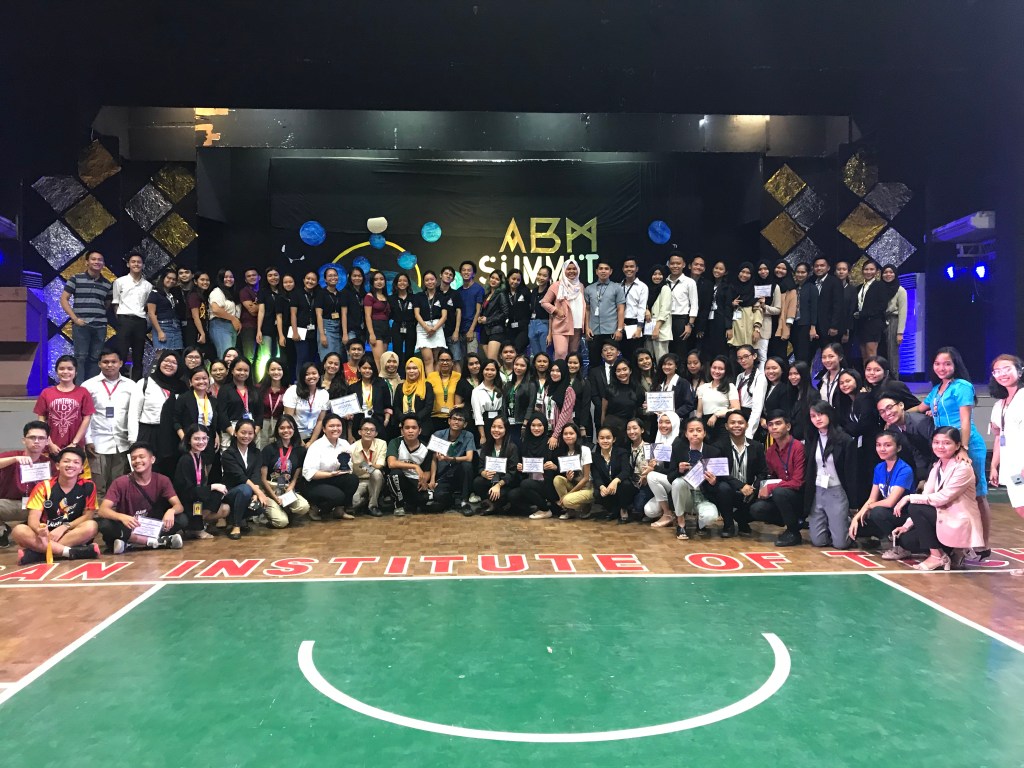
On ABM summit we have some fun because we get to share our learnings and the event was entertaining, also we have an additional learnings because of that certain events. We may not bring home the beacon but we know that we did our very best, and one there’s one word that we stand for, ‘FIGHTING’.

It may be the end of study here in this great school, every moment was a memorable one, I will always live to remember a special friends like you guys. You are funny and a wonderful friends, you make every single moment a special one to remember. Now we have to go on to the larger world, to continue our studies, I wish we could be together once more in life. Wishing you well in your further studies and future endeavors, farewell my dear friends, I will always try to keep in touch all the time.


We surprise our adviser, Sir Diego Unde on personnel’s day. We, lucy people is so grateful because he is our adviser. A mentor like him is a blessing. He is not just my mentor but my motivator, brother and father. He teach us to be a better person and better version of ourselves. I’m so thankful that i have a adviser like him. It just like a dream come true. An adviser that you can share your problem and give you an piece of advice. An adviser that you can bond like a brother or friend. An adviser that cheers you up when you are down. An adviser that believe in you when you can’t even believe in yourself.
He is one of the reasons why my senior high more memorable.
Because of him, i have so many realization in life. Knowing the story of his life, i realize that i am blessed enough and thankful for what i have now. Also, i realize that giving up is not a solution to your problem. The biggest thing i learn from him is don’t give up no matter how hard life is. Just keep on praying and you can get what you want in a right time. Maybe you can’t have it now but trust God, He will give it to you in a right time. When that time comes you will realize that the struggle you pass by is just a test for you and you will be thankful to GOD after that.
There are many many approaches about environmental ethics but in my opinion the best approach is the Ecocentrism. Why ecocentrism? Is it because ecocentrism simply means we are not concerned only with humanity; we extend respect and care to all life. It also expands the moral community and ethics from being just ourselves. I also believe on importance of once life. Ecocentrism talks not just about our lives but also the other things that have life of their own.
If, as we hope, the term ‘ecocentrism’ becomes established in the ideas of political and ecological speeches, we believe it is also important that is does so without being mixed up or diluted. By this, we mean that ecocentrism should be understood as being at the end of the ethical spectrum of inclusiveness rather than serving as a ‘catch all’ for ecocentrism proper plus any other worldview that grants true value more generously. Also ecocentrism is very important that every human should be much more careful to not abuse the nature or other living and non living things for them to not be left out. We should not be self centered of human centered or what we call ‘anthropocentric’ because we humans are created by God to take care and love those who and what God created and ecocentrism grants more value than anthropocentrism.
Ecocentrism is focuses on the intrinsic value of all these entities in their own right while acknowledging their instrumental value to one another as part of the natural process. The term itself preferences the ecosystem as the most important unit or source of value. All living and non-living things have a right to live in this world. God created them for a reason. All of us has a purpose in this world.

If, as we hope, the term ‘ecocentrism’ becomes established in the ideas of political and ecological speeches, we believe it is also important that is does so without being mixed up or diluted. By this, we mean that ecocentrism should be understood as being at the end of the ethical spectrum of inclusiveness rather than serving as a ‘catch all’ for ecocentrism proper plus any other worldview that grants true value more generously.
Also ecocentrism is very important that every human should be much more careful to not abuse the nature or other living and non living things for them to not be left out. We should not be self centered of human centered or what we call ‘anthropocentric’ because we humans are created by God to take care and love those who and what God created and ecocentrism grants more value than anthropocentrism.

We take up our graduation picturial. It is sad to think that one more month to go is me and my friends are gonna take our separate ways, I will always gonna remember all the memories we shared together and I will hope all the best for them. As for me I take an exam from this university (MSU-IIT) and hoping I will pass it.
I together my mother, accompanied my brother to take an entrance exam to the same university I take exam, I guided him to where will he go to take an exam. I wish him all the best and hoping that he will pass, while waiting for my brother, me and my mom bonded at the mall doing some window shopping and etc. Then after, my brother finished taking an exam and head home. My brother told me how hard it is, and I couldn’t agree more.

We have our family bonding at El Lauriento swimming pool and I felt extreme happiness, because, again, at last my father is there to join us though my older brother isn’t there, but still, I enjoyed. We’ve been there until the night falls and we spent our time enjoying the water, we also have our little “competition” of ours like, swimming contest, sliding, and tagging in the pool. We have fun that, it is like our memories came back one one by one when we are a little child, and savour our time together with my father that we only see if he have a time. So, all in all it was a fun and a jolly day.

Me and my other friends celebrated the 19th birthday of my childhood bestfriend alimah. Indeed it was a good day. We laughed and lauged like if it is our last, because again it is our dear friends birthday and we need to make that day the best for her.

Exams day. The first day of our exam isn’t that hard though and we all know that exams is an extreme struggle for all the students. So, my routine is I sleep early so that i could wake up early for me to study at near dawn, approximately 2:00 am.

This week is just a typical week. We just had a bonding with my family. We eat in restaurant and talk about stuff and share what happened to our weekdays. I actually have a good time that time because I’m with my mother and siblings.

It is good to start my week because I just passed the Xavier University scholarship exam. It actually a blessing because I didn’t expect that I actually pass. I’m Very Thankful To God to that. I can say my parents is proud of me because I see their smile and I can see in their eyes.

This week is also a special week of one of my friend Schnider because it’s her 18th birthday. We surprise her at frydays and had fun and make her day special. I can say what happen in that surprise is one of our memorable day with our other friends. We joke around and seize the day. We’re happy that we are complete that time because some of us is busy with school works. But that night, we having fun and set aside our problem in our school works.
I can say that this week is fun but at the same time sad because my grandmother is pretty sick and it is a heart breaking seeing your loved ones suffering and getting hurt in her ill. It more hurt when she talked like she is giving up live this world. Like I couldn’t imagine that thing can happen.

 jadidah's blog