“Disclaimer: Academic Purposes only”

Functionalism

Structural functionalism has provided one of the most important perspectives of sociological research in the twentieth century and has been a major influence on research in the social sciences, including gender studies. Viewing the family as the most integral component of society, assumptions about gender roles within marriage assume a prominent place in this perspective.
Functionalists argue that gender roles were established well before the pre-industrial era when men typically took care of responsibilities outside of the home, such as hunting, and women typically took care of the domestic responsibilities in or around the home. These roles were considered functional because women were often limited by the physical restraints of pregnancy and nursing and unable to leave the home for long periods of time. Once established, these roles were passed on to subsequent generations since they served as an effective means of keeping the family system functioning properly.
Conflict Theory

According to conflict theory, society is a struggle for dominance among social groups (like women versus men) that compete for scarce resources. When sociologists examine gender from this perspective, we can view men as the dominant group and women as the subordinate group. According to conflict theory, social problems are created when dominant groups exploit or oppress subordinate groups. Consider the Women’s Suffrage Movement or the debate over women’s “right to choose” their reproductive futures. It is difficult for women to rise above men, as dominant group members create the rules for success and opportunity in society (Farrington and Chertok 1993).
Friedrich Engels, a German sociologist, studied family structure and gender roles. Engels suggested that the same owner-worker relationship seen in the labor force is also seen in the household, with women assuming the role of the proletariat. This is due to women’s dependence on men for the attainment of wages, which is even worse for women who are entirely dependent upon their spouses for economic support. Contemporary conflict theorists suggest that when women become wage earners, they can gain power in the family structure and create more democratic arrangements in the home, although they may still carry the majority of the domestic burden, as noted earlier (Rismanand and Johnson-Sumerford 1998).
Symbolic Interactionism
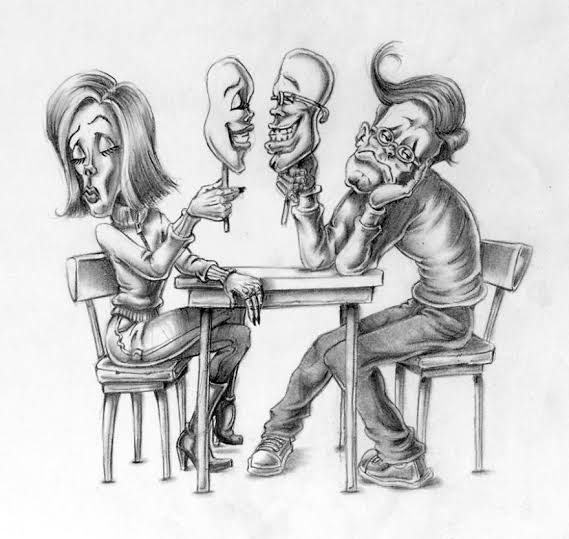
Symbolic interactionism aims to understand human behavior by analyzing the critical role of symbols in human interaction. This is certainly relevant to the discussion of masculinity and femininity. Imagine that you walk into a bank hoping to get a small loan for school, a home, or a small business venture. If you meet with a male loan officer, you may state your case logically by listing all the hard numbers that make you a qualified applicant as a means of appealing to the analytical characteristics associated with masculinity. If you meet with a female loan officer, you may make an emotional appeal by stating your good intentions as a means of appealing to the caring characteristics associated with femininity.
Because the meanings attached to symbols are socially created and not natural, and fluid, not static, we act and react to symbols based on the current assigned meaning. The word gay, for example, once meant “cheerful,” but by the 1960s it carried the primary meaning of “homosexual.” In transition, it was even known to mean “careless” or “bright and showing” (Oxford American Dictionary 2010). Furthermore, the word gay (as it refers to a homosexual), carried a somewhat negative and unfavorable meaning fifty years ago, but it has since gained more neutral and even positive connotations. When people perform tasks or possess characteristics based on the gender role assigned to them, they are said to be doing gender. This notion is based on the work of West and Zimmerman (1987). Whether we are expressing our masculinity or femininity, West and Zimmerman argue, we are always “doing gender.” Thus, gender is something we do or perform, not something we are.
In other words, both gender and sexuality are socially constructed. The social construction of sexuality refers to the way in which socially created definitions about the cultural appropriateness of sex-linked behavior shape the way people see and experience sexuality. This is in marked contrast to theories of sex, gender, and sexuality that link male and female behavior to biological determinism, or the belief that men and women behave differently due to differences in their biology.
Evolutionary Theory

Evolutionary theory is the area that focuses on further development and refinement of the modern synthesis of evolution and genetics. Notable topics include the appropriate level of selection, the relative importance of natural selection and other mechanisms, and the rate of evolution at genotypic and phenotypic levels.
Evolutionary theory highlights the adaptive value of within-species variability. Optimal biological and behavioral strategies differ depending on the nature of the environmental context as well as the characteristics of the organism such as age, sex, health, or physical size. Pubertal timing is an example of an aspect of human physiological development that shows phenotypic plasticity. As suggested above, the typical sequence of reproductive development in humans includes a period of delay between puberty and sexual debut. During this time, adolescents acquire the physical, social, and economic resources necessary to attract a mate, reproduce, and successfully rear their young to reproductive age.
From an evolutionary perspective, early puberty is understood as an adaptive strategy in the context of family stressors and a negative quality of family relationships (Belsky, Steinberg, & Draper, 1991; James, Ellis, Schlomer, & Garber, 2012). Over the course of human evolution, early exposure to harsh, unpredictable family contexts, and/or inadequate resources has been shown to accelerate the life history resulting in an earlier onset of pubertal physical maturation and earlier age of sexual debut (Ellis, 2004). This relationship is particularly notable for girls. Physiological response to stressful conditions, especially the frequent activation of the HPA axis, is associated with early pubertal development (Ellis & Del Giudice, 2014). According to evolutionary theory, early onset of puberty and accelerated entry into sexual activity can be viewed as adaptive when parental investment is low and resources are inadequate or uncertain. Those individuals whose sexual development is accelerated increase their chances of attracting a mate and surviving to reproduce.
Exchange theory

The social exchange theory has been applied to many different situations; in the context of sexuality, the theory aims at explaining why two particular people may engage in sexual behavior, while another two may not. The theory therefore places the focus predominantly on the relational context. It is placed here under social theories to highlight the strong influence of interpersonal power dynamics, gendered power in society, and because it takes an interpersonal orientation in analysis; however, it is also compatible with evolutionary mate-selection strategies. The social exchange theory posits that human sexuality can be analyzed with the concepts of economics – that people attempt to maximize their rewards while minimizing costs, that interaction with others is a series of exchanges, and that people who receive rewards feel obligated to reciprocate (Sprecher, 1998).
The social exchange theory has been criticized on several fronts. One major obstacle in the empirical evaluation of the concept is the subjective nature of costs and rewards, which may differ in value between different people, over time, or through comparisons with other people or rewards. The social exchange model also typically tests how exchanges affect relationships and sexual variables; meanwhile, very little research has been conducted on how the quality of a relationship affects exchange variables. The social exchange theory nevertheless demonstrates that sexual decision-making is grounded in a broader social context that regulates the risks and benefits of sex. It also demonstrates how broad social movements, such as gender equality and feminism, can alter the sexual landscape and affect decision-making.
For more information click the link below.
https://www.youtube.com/watch?v=X1mOqso0gAA
#payagnimacapil
 jadidah's blog